
Finding Your Weirdness

Chasing The Dead Guy Who Has Your Face
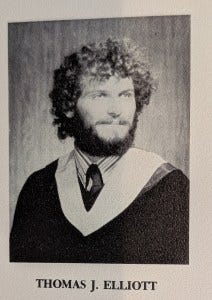
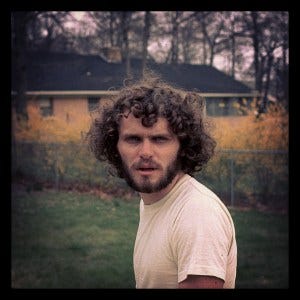
When I was twenty and looked something like the shambles above, my father and I visited my godmother, his sister, Aunt Mary Elliott Farmer, at her rambling 19th century house in Purdys, New York. (She was much more sisterly with my father then their youngest sibling, the policewoman with the pearl handled revolver, Bess.) They slipped into one of those ‘good old times’ conversations about childhood summers with their grandparents in Rhode Island when suddenly Mary looking at me grabbed my father’s elbow turning him toward the mantle of their fireplace and the two oval picture frames? She said, “Doesn’t T.J. look like Grandpa?”
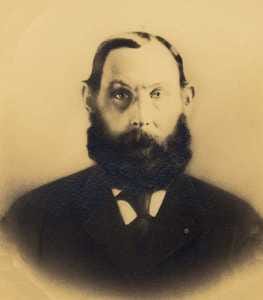
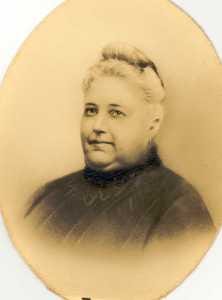
The man in one of the brass ringed frames was my great-grandfather, James Elliott, who immigrated to America from Ireland when barely a teenager, obviously a long time before this photograph was taken. The woman in the other frame was his wife, my Great Grandmother Mary Kenyon Elliott. (More about her in another chapter.) My godmother Aunt Mary looked identical to that grandmother, which might be why she paid attention to such similarities.
Aunt Mary pointed out to my father how with my newly sprouted beard I resembled James. Deep set blue eyes, big bushy beard, long nose. Even the ears (hidden in the above photos by my 70s coiffure) stuck out at roughly the same angle. Or do they? Looking at the image, did I see a similarity or imagine one?

Therein lies one danger of genealogical explorations: what we are wishing for is to see the dead in us. Why? To belong. Until this moment no one had ever suggested that I looked like anyone in the Elliott family. All of my siblings whether they liked it or not were pegged as being the dead ringer for this or that aunt or uncle. Since at that time, I had not met my mother’s people, the Connaghans who never left Ireland, this absence of physical identification allowed some of my brothers ——okay, just Michael — to spin torturing tales as to my foundling status. But now Aunt Mary, a reliable source, attached me above all of the others to perhaps the most significant figure in the Elliott lineage, the one to whom we owed the debt of being Americans.
Looking like someone matters — even if the likeness is literally only skin deep. To be the ‘spit and image’ of a relative depending upon their standing within the family could bequeath honor or derision. The former was the case here and the incorporation of a tough ancestor bolstered my sense of self.
Daniel Dennett once wrote that “Selves are ‘centres of narrative gravity’. They are the abstract points around which a person’s mental life is structured. Like centres of physical gravity, they are devices that we employ in order to ‘understand, and predict, and make sense of, the behaviour of some very complicated things’ – namely, us.” Beyond the DNA and the census records, genealogy is mostly about stories of these selves especially the incomplete ones we must construct as best we can. “Your face tells a story…”, as Julia Roberts astutely noted once and if it looks like an ancestor’s face then perhaps your stories are linked as well. The extrapolation from GG James’ similar orbital arch to his being a source of my other attributes was a temptation to which I happily surrendered.
Most of the stories about me from the start were about my disordered, eccentric, oddness. My weirdness. Now at twenty, a semblance to my great-grandfather aligned me with his stories, and he was from the little made known to our generation a predecessor of mine in waywardness of personality. Looking like that James Elliott (there have been many in our tree) gave a preface to my own nascent narrative, one more daring than anything I had yet or since authored in my life.
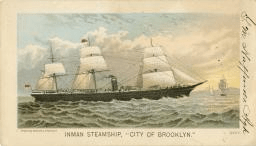
In 1872, thirteen year-old James transatlantic journey to the port of New York was in the wake of more than two million Irish emigrants over the previous four decades. In 1965, 13-year-old T.J. traveled from the Jersey Shore through the dangers of Newark Penn Station into the wilds of Jersey City to attend St. Peter’s Prep. Same thing, right? Traveling on a sailing steamer, The City of Brooklyn, James Went 3400 nautical miles to reach his destination, but I went 48 miles each way for four years totaling over 60,000 miles on rickety risky New York Penn trains. The similarities are a stretch, but they do exist.
For example, a reading of The City of Brooklyn’s manifest suggested that James may have fudged his age in order to be able to travel alone. A big fellow, he came off as older in order to make the passage. Similarly as a teen, with a military buzz cut forced upon me by my father until leaving for college and also larger and riper looking than my calendar age , I routinely convinced the clerk at Third Avenue Liquors in Asbury Park that my driver’s license was back in my barracks at Fort Monmouth. We were both risk-takers.
But nothing I did at 13 matched James leaving a home to which he would never return. He likely hopped an Irish North Western Railway train from Clones down to Dundalk and and then across on a night boat to Liverpool, two journeys that were likely his first time on a train and a boat. (More on the Monaghan of his time later, but we know that the Anglo-Irish who ruled his neighborhood in their writings suggest the experiences of the local Catholics are limited; one biographer of the local nobility described late 19th century Monaghan as “still feral”, which means Great Grandfather and the family weren’t taking many train trips.) How did he wrap his head around so vast a journey? Again, he’s thirteen.
The stories that came down to me about a man who died five years before I was born suggested also that he was a little weird in the sense of ‘out of the ordinary course’. My father knew him pretty well. As a child before the family moved to the Bronx, one of Dad’s chores was to deliver lunch to James at his mechanic’s job in Pawtucket. In the huge machine shop yard, he heard James’ well-turned phrases — ‘I’m foundered’ meant he was freezing cold, ‘a bird never flew on one wing’ suggested a second helping was in order, an elaborate Catholic mass would be described as ‘Romish’.
In actuality, when I was 20 and then again in 2005 on that trip of finding my other great grandfather, there was very little that I knew about either of them, which was what made the physical resemblance first seen in 1972 significant; we’ve not yet found any photographs of Thomas Ryan. However inflated, that photographic connection to James fanned my interest in 2010 when my brother John proposed the trip that would have as its main objective exploring the Elliotts in County Monaghan. Until then, my few forays into Mormon family research centers had yielded me some microfilm records of people with the correct spelling our name (two ells and two tees) in that county, but nothing definitely connecting them to me. And there were lots of Elliotts up that way. So, finding our own specific strain promised the possibility of finding out more about my specific brand. But first I had to narrow down the Elliotts in question. Even with the right spelling, they are not all the same.
We are a storytelling animal. How else could we understand who we are? Genealogy is at its core a search for stories, stories that place us, our self, in a broader context. It's like reading a novel, a family sage. You are spinning a lovely yarn here, my friend!